
Pharmacy residency programs have experienced a growth spurt. Non-specialized PGY-1 programs increased by 7.6% from 2020 to 2023.1 During the same period, the number of U.S. PharmD graduates decreased by 13.3%.2,3 The decline in pharmacy school enrollment is well known.4 Its long-term effects on residency programs are unknown. Less students may lead to higher residency match rates. Less students may also mean less competition for future clinical positions. In this case, students do not feel that they need a residency and programs have empty positions. The residency market relies on employer preferences. If less pharmacists are available, then employers might care less about residency training. Programs need to keep residencies relevant in this changing landscape.
A common reason to pursue residency is to increase employment opportunities. Hospital, ambulatory care, and other clinical employers prefer former residents.5 A residency helps pharmacists earn coveted clinical jobs. This makes residency positions competitive among students. The competition has extended to pharmacy schools. A higher student body match rate earns a school bragging rights.6
A 2022 systemic review investigated factors that affect residency match rates.7 The review found that school-provided mock interviews and residency preparatory programs increased match rates. The studies concerning APPE rotations had mixed results. One study discovered that finishing an infectious disease or ambulatory care rotation before the ASHP Midyear Meeting significantly increased a student’s chances of matching. A different study found that the timing of APPE rotations had no statistical difference. Having a higher pharmacy school GPA significantly increased matching probability. Schools with higher match rates were older, had NAPLEX pass rates > 95%, or had an association with an academic medical center. The reviews’ studies varied in design and comparators, so making conclusions is difficult.7 The review was more concerned with who gets matched. It did not study the types of students that apply for residencies. As enrollment dwindles, programs should learn why students pursue residency.
Many pharmacy school graduates jump into a pharmacy career instead of pursuing residency. One study investigated why some students hesitate to pursue residency.8 The researchers surveyed P2 and P3 students from five pharmacy schools in Texas. All schools had four-year programs. The survey covered student attitudes and perceived barriers to residency. The study compared students pursuing residency to those labeled as “undecided” about pursuing residency. Undecided students had a less favorable outlook on a residency’s value. They were also more likely to feel that their family and friends would not support them pursuing residency. Undecided students had more student debt and family obligations.8 These data highlight the costs of applying for residency. The ASHP Midyear Residency Showcase and residency interviews cost time and money. A stellar residency application involves a huge time investment. Residents receive less pay than pharmacists.5 Residents can defer student loans, but they still gather interest.9,10 Those with family obligations find the working hours challenging.11 Residency is a privilege for students with little to no debt and personal obligations.
The decline in pharmacy school applications and enrollments is notable.4 The ASHP Match Statistics reports show this trend is spilling over to the residency match.1 From 2020 to 2024, non-specialized PGY-1 programs have increased by 7.86% and positions by 6.89%. At the same time, the number of residency applicants has decreased by 18.7%. This has caused the match rate to increase from 63% in 2020 to 81% in 2024. Program and position fill rates are above 90% but are trickling down (see Figures 1 and 2).1 PGY-2 programs have a similar trend: a growth in supply with a drop in demand (see Figures 3 and 4). The PGY-2 applicant match rate has increased from 73% in 2020 to 84% in 2024.1 A smaller applicant pool has been a boon for students pursuing residency. However, low school enrollments are not the only factor adding to this phenomenon. In some cases, students have found other ways to meet their career goals.
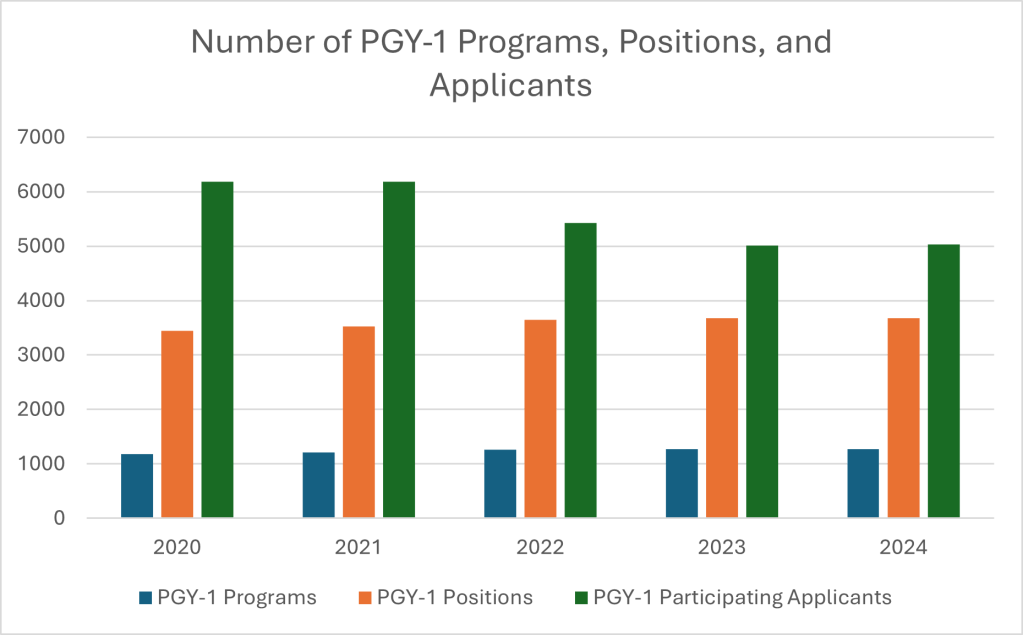
Figure 1. The number of PGY-1 programs, positions, and applicants from 2020 through 2024.1
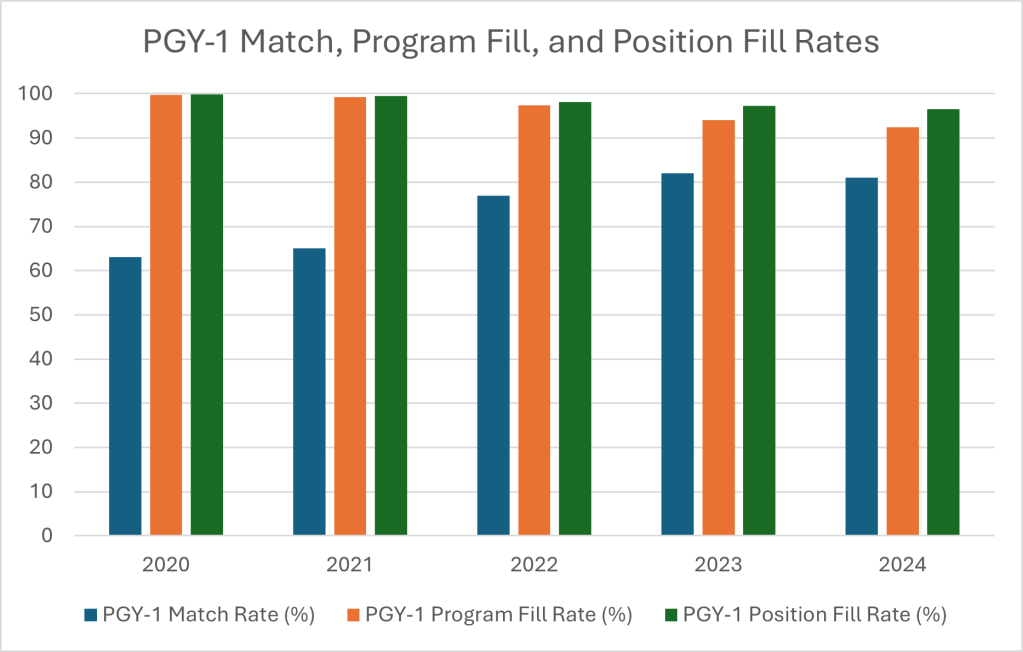
Figure 2. PGY-1 percent match rates, program fill rates, and position fill rates from 2020 through 2024.1

Figure 3. The number of PGY-2 programs, positions, and applicants from 2020 through 2024.1
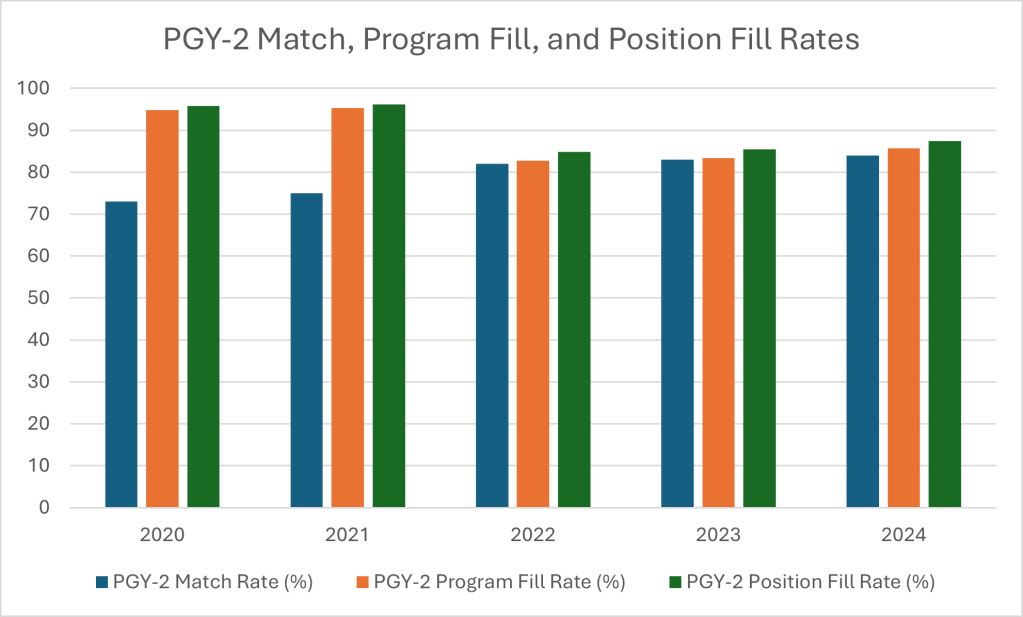
Figure 4. PGY-2 percent match rates, program fill rates, and position fill rates from 2020 through 2024.1
Residency makes sense for those wishing to work in a hospital or ambulatory care setting. Several employers find residency valuable, but not all employers exclude non-residents. Some pharmacists begin their clinical careers in on-call positions and eventually work full-time.5 This means former residents work alongside a pharmacist with no residency training. The non-resident pharmacist received one to two extra years of pharmacist pay and student loan repayment. This makes students question the financial implications of completing residency.5 Residency is an excellent way to improve one’s knowledge and skills, but it comes at a literal cost.
Some careers do not require residency, such as retail pharmacy positions. For other students, an MBA degree can fulfill a desire to become a pharmacy director.5 Many MBA programs cater to working professionals.12 A pharmacy fellowship is appropriate for those wanting a career in research.9 While a residency has value, it is not the only path to a pharmacy career.
Residency programs can fill most of their positions, for now. Declining pharmacy school enrollment correlates with declining residency applications. This is great news for aspiring residents, but not for the programs. Applying to and working in a residency program is expensive and time consuming. These are major barriers for students with significant debt and personal obligations. If residency programs wish to thrive, then they need to address these barriers. A residency holds immense value, so programs must increase accessibility.
References
- ASHP Match Statistics. National Matching Services Inc. Updated 2024. Accessed September 10, 2024. https://natmatch.com/ashprmp/stats.html
- Profile of Pharmacy Students Fall 2021. American Association of Colleges of Pharmacy (AACP). 2022. Accessed October 8, 2024. https://view.officeapps.live.com/op/view.aspx?src=https%3A%2F%2Fwww.aacp.org%2Fsites%2Fdefault%2Ffiles%2F2023-06%2Ffall-2021-pps-applications.xlsx&wdOrigin=BROWSELINK
- Profile of Pharmacy Students Fall 2023. American Association of Colleges of Pharmacy (AACP). 2022. Accessed October 8, 2024. https://view.officeapps.live.com/op/view.aspx?src=https%3A%2F%2Fwww.aacp.org%2Fsites%2Fdefault%2Ffiles%2F2024-08%2Ffall-2023-pps-applications.xlsx&wdOrigin=BROWSELINK
- PharmCAS Applicant Data Report 2022-2023. American Association of Colleges of Pharmacy (AACP). 2023. Accessed September 9, 2024. https://drugchannelsinstitute.com/files/2022_23%20PharmCAS_Applicant_Data_Report.pdf
- Sison, G. Is a pharmacy residency worth it? The Checkup by SingleCare. December 15, 2022. Accessed October 2, 2024. https://www.singlecare.com/blog/is-a-pharmacy-residency-worth-it/
- Phillips, M. UNC Eshelman School of Pharmacy maintains No. 1 residency match rate in U.S. among schools with 75+ students registering to match. UNC Eshelman School of Pharmacy. March 13, 2024. Updated April 11, 2024. Accessed October 2, 2024. https://pharmacy.unc.edu/2024/03/unc-eshelman-school-of-pharmacy-maintains-no-1-residency-match-rate-in-u-s-among-schools-with-75-students-registering-to-match/
- Miller J, Lavender D, Johnson B, et al. Factors associated with pharmacy residency matching: a scoping review. J Am Coll Clin Pharm. 2023; 6(2): 171-185. doi:10.1002/jac5.1704
- Haghparast P, Fisher D, Lewing B, Sansgiry S. Factors associated with intention to pursue pharmacy residency: the undecided student issue. Health Prof Educ. 2020;6(2): 170-175. doi: 10.1016/j.hpe.2020.02.003
- Gauthier T. Six reasons not to do a pharmacy residency. IDStewardship. Updated November 2016. Accessed October 2, 2024. https://www.idstewardship.com/5-reasons-not-to-do-a-pharmacy-residency/
- Get temporary relief: deferment and forbearance. Federal Student Aid: An Office of the U.S. Department of Education. Accessed October 16, 2024. https://studentaid.gov/manage-loans/lower-payments/get-temporary-relief
- DeMarzo A. Pharmacy residency is not the end-all-be-all for pharmacy students. Pharmacy Times. 2023; 17(2): 10-11. https://cdn.sanity.io/files/0vv8moc6/pharmacytimes/c36d2ef59c9529df9d936fc5ed270967d642c4a6.pdf/02_PCVOL17NO2-2023_Issue-Full.pdf
- 2024 best part-time MBA program. U.S. News and World Report. 2024. Accessed October 16, 2024. https://www.usnews.com/best-graduate-schools/top-business-schools/part-time-rankings
 Dahlia Medical Communications
Leave a comment